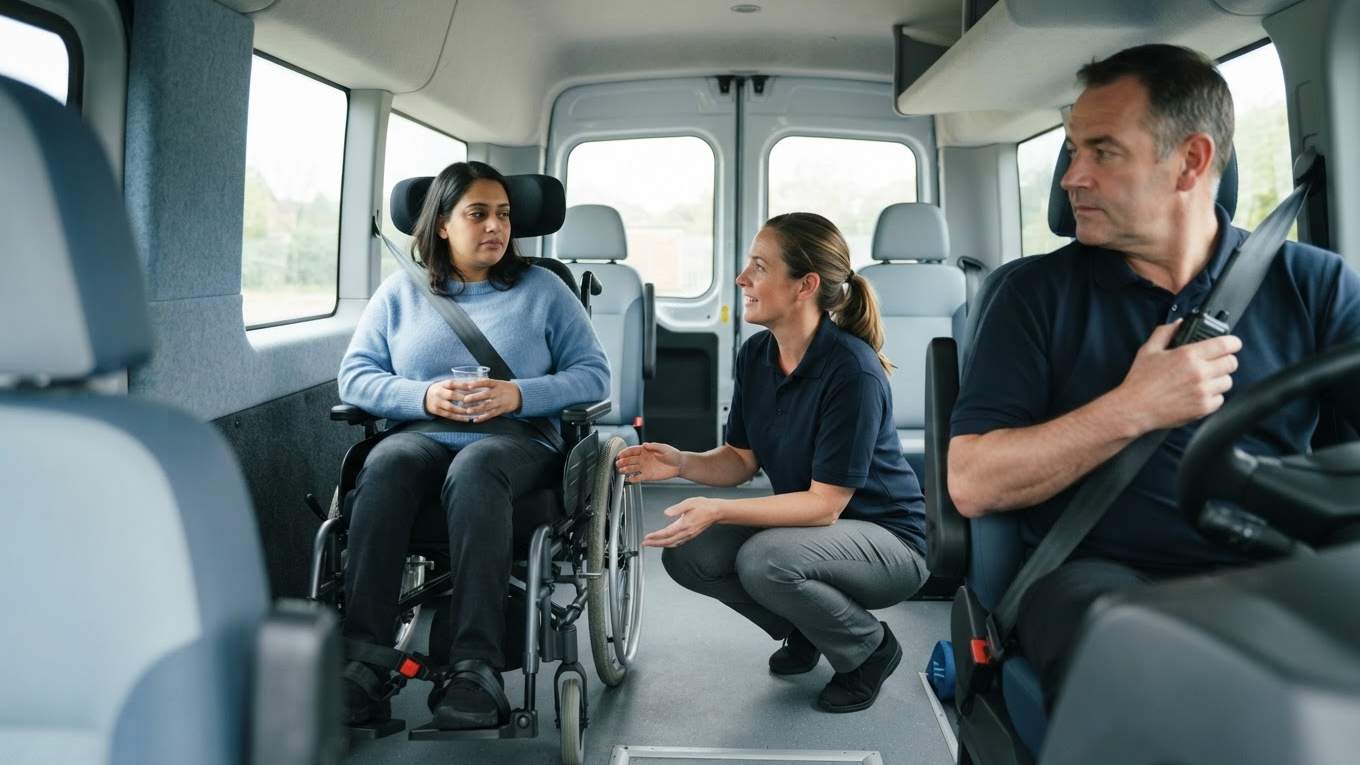
A seizure on a moving vehicle is one of the situations school transport staff worry about most. The passenger may be strapped into a seat, a harness or a wheelchair; the driver has a vehicle to control; and the person who knows the child best is often not on board. What follows is the order of things, as our CPD Certified Epilepsy Awareness for SEND Passenger Transport course teaches it.
The passenger’s own plan comes first. Anyone who travels with a child with epilepsy should have read their current seizure or healthcare plan before the journey. It says what their seizures usually look like, how long they usually last, and when to call 999 — and it overrides the general rules below.
1. If it starts while the vehicle is moving
- The driver keeps control and stops as soon as it is safe and lawful to do so, secures the vehicle, and only then helps or uses a phone — even if there is no passenger assistant on board.
- The passenger assistant looks after the passenger and follows the plan: protects them from harm, does not restrain them, and starts timing.
- Do not delay 999 just because the vehicle has not stopped yet. If the criteria below are met, call.
2. During the seizure
- Stay with them and stay calm.
- Move anything that could hurt them out of the way, and cushion their head if you can.
- Note the time it started — and the time it ends.
- Loosen tight clothing around the neck, only if it is easy and safe to do.
And do not:
- hold them down or try to stop their movements;
- put anything in their mouth, including your fingers;
- move them unless they are in danger where they are;
- give them food or drink until they are fully alert.
3. Passengers in wheelchairs, seatbelts and harnesses
A travel restraint is not the same as restraining someone’s seizure movements. For a passenger secured in a wheelchair, apply or check the brakes and the securement, leave the seatbelt or harness fastened unless the plan says otherwise or they are in immediate danger, support and cushion their head where practicable, and time the seizure. Do not take them out of the chair to put them in the recovery position. If their breathing or position becomes unsafe, get urgent advice and call 999 if needed.
4. When to call 999
Call 999 if:
- it is the person’s first seizure;
- it lasts longer than is usual for them — or more than 5 minutes if you do not know what is usual;
- they do not recover between seizures, or do not regain full consciousness;
- they are seriously injured;
- they have difficulty breathing after the seizure; or
- their individual plan says to. If the plan says call at 3 minutes, call at 3 minutes.
If breathing is absent or not normal once the seizure stops, call 999 straight away and follow the call handler’s instructions. When you call, give your exact location and how the ambulance can reach the vehicle safely, when the seizure started and how long it has lasted, whether the passenger is breathing normally and how responsive they are, any injuries, and what you have done so far.
5. Rescue medication: know the boundary
Some passengers have prescribed rescue medication, such as buccal midazolam. Only staff who have had separate training, have shown they are competent and are authorised under the passenger’s plan and their employer’s arrangements may give it. Awareness training — ours included — does not authorise anyone to give medication. If medication is needed and no one on board is authorised, call 999.
6. Afterwards: recovery, dignity and handover
- When the jerking stops, check their breathing. If they are unresponsive but breathing, and it is safe, put them in the recovery position — wheelchair users stay in their chair.
- Stay with them until they have fully recovered. People are often tired, confused or embarrassed; reassure them, explain what happened, and shield them from other passengers’ attention.
- Do not rush them, and use the way they normally communicate.
Then write it down, as facts only:
- the start and finish time;
- what you saw — responsiveness, movements, breathing, any injury, and how they recovered;
- the first aid given, any 999 call, and any medication given and by whom;
- who you told, and who you handed over to.
Hand those facts to the authorised person at school or home, discreetly. Leave out opinions and guesses about the cause.
Do you need epilepsy training for school transport?
Your local authority decides, and writes it into the contract. Some require it for all drivers and passenger assistant on their home-to-school contracts: Brighton & Hove, for example, requires contracted drivers and vehicle passenger assistants to complete epilepsy training online and to refresh it after three years. The DfE statutory guidance also expects staff to be trained in handling emergencies and in the specific needs of the children they carry — see our guide to the training requirements.
Epilepsy Awareness for SEND Passenger Transport is written for exactly this job: about 90 minutes online, with transport scenarios, a 15-question assessment and a CPD Certified certificate with a verification ID. It is £24.99, one payment.
Sources
- NHS, What to do if someone has a seizure (fit).
- Brighton & Hove City Council, Home to school transport: epilepsy training and epilepsy protocol.
- Department for Education, Travel to school for children of compulsory school age (statutory guidance).